
VERINA STAR
Lagoon 55
10 Guests
5 Cabins
3 Crew
High: €30,500+ VAT + APA /wk
Low: €22,000 + VAT + APA /wk
View Yacht

By James Teague, Co-Founder & Yacht Charter Broker, High Tide Yacht Charters
If you have started researching a yacht charter in Greece, you will have come across the word Meltemi. It is the single most talked-about weather feature of a Greek summer, and also one of the most misunderstood. Some people fear it. Others book their whole trip around it. The truth sits somewhere in between, and understanding it is one of the easiest ways to make sure your charter goes smoothly.
The Meltemi (also called the Etesian wind) is a strong, dry northerly wind that blows across the Aegean Sea through the summer months. It is a seasonal pattern rather than a storm: a steady flow of air from the north, usually blowing from the north or north-east in the northern Aegean and curving to the north-west further south.
It is driven by a pressure difference. A high-pressure system sits over the Balkans and the Mediterranean, while a thermal low-pressure area builds over Turkey and the wider region to the east as the summer heats up. Air is pulled from the high to the low, and the Aegean funnels it down between the Greek mainland and the Turkish coast.
The result is a wind that arrives with clear blue skies, low humidity and excellent visibility. It is the reason Greek summers feel dry and bright rather than muggy.
The Meltemi is most reliable from mid-July to the end of August, and can appear from around May to the middle of September. A few patterns are worth knowing:
The Meltemi is a feature of the Aegean, so where you charter matters a great deal.

A Meltemi does not ruin a charter. What it changes is how you or your captain plans the days. Here is what to expect:
Itinerary changes. Your captain will always put safety and comfort first. On a strong day they may shorten a crossing, leave earlier in the morning to get ahead of the wind, or choose a route that keeps you on the sheltered (leeward) side of the islands. That is normal and expected, which is why we always recommend treating your itinerary as a plan rather than a promise.
Anchorages and harbours. Some bays that are glassy in calm weather become exposed in a northerly. Experienced crews know which coves offer shelter and which to save for a quieter day. Popular harbours such as Mykonos can also fill up fast when conditions push everyone towards the same places.
Comfort onboard. A larger motor yacht or a catamaran generally handles Meltemi conditions with more stability than a smaller monohull. Stabilisers on a motor yacht make a noticeable difference on longer crossings. If you or your guests are prone to seasickness, let your broker know early, as it can influence both the choice of yacht and the route.
Water toys and activities. Paddleboarding, jet skis and tender trips are best in the calmer mornings and evenings. Afternoons are better for swimming off the back of the yacht in a sheltered bay, or simply relaxing onboard.
The upside. For sailors, the Meltemi is exactly what they come for: reliable, powerful wind and fast, exhilarating sailing. It also keeps the air cooler and fresher in the peak of summer heat, and skies are usually brilliant.
A windy day in harbour is rarely a lost day, because most Greek islands reward a slow wander ashore. Some of the best experiences of a charter only happen when you are not racing to the next anchorage. Your captain will usually tell you the evening before if a stay-put day is likely, so you can plan around it.
If the Meltemi keeps you in Mykonos, spend the afternoon in the whitewashed lanes of Mykonos Town, then walk out to the windmills and Little Venice for a drink above the water. The Paraportiani church is a short stroll away, and it is worth booking a harbourfront taverna early.
On Paros, the old town of Parikia and the Panagia Ekatontapyliani church make an easy first stop. From there a taxi takes you to the fishing village of Naoussa for lunch, or up to the hilltop village of Lefkes for views across the island.
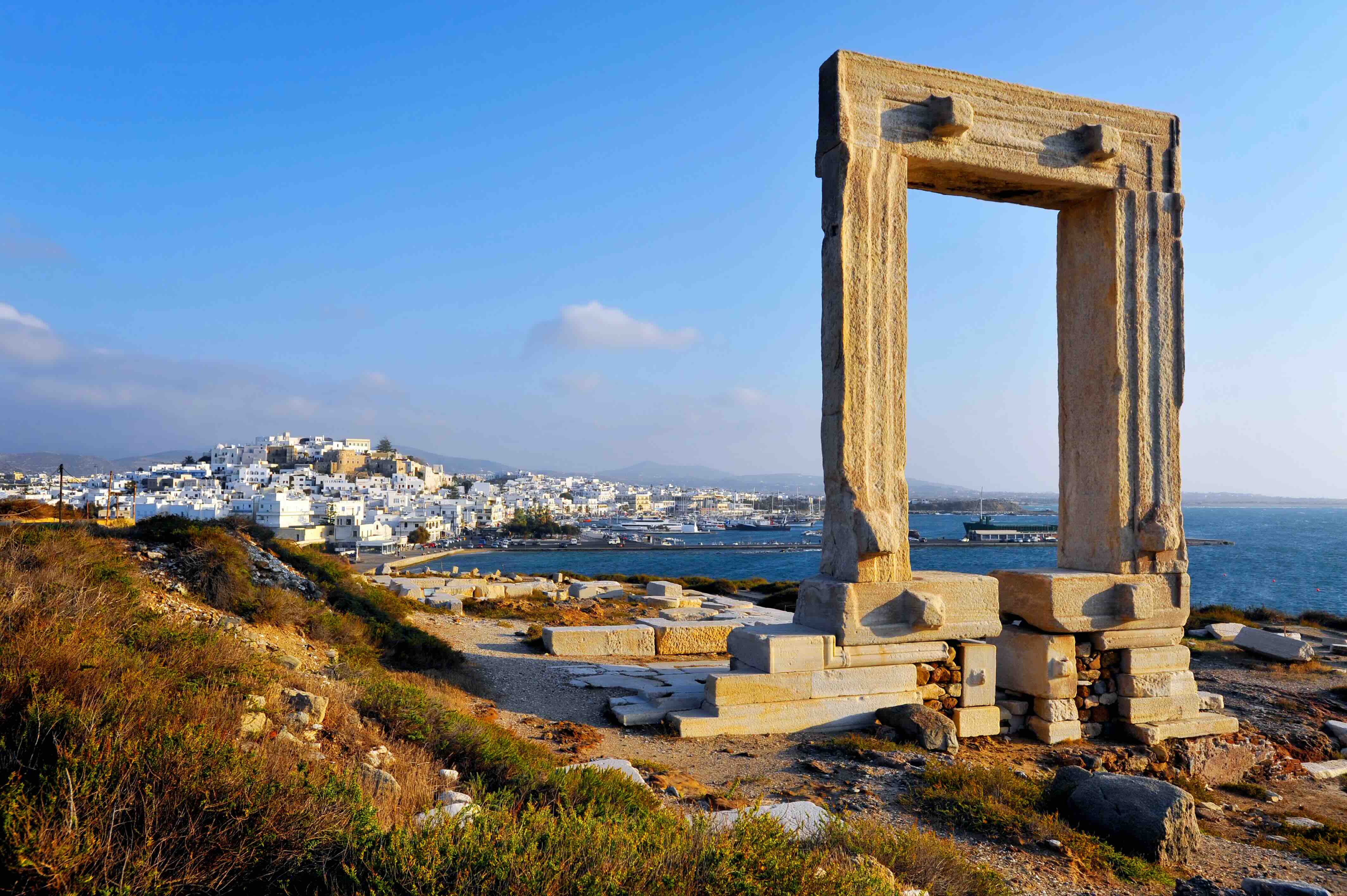
A windy day on Naxos is best spent walking up through the old Chora to the Portara, the marble gateway of an unfinished temple of Apollo. If you hire a car for the day, the mountain village of Apiranthos and the Halki valley, where you can taste the local kitron liqueur, are well worth the drive.
In Santorini, you can follow the road along the caldera rim between Fira and Oia, visit the excavated Bronze Age town of Akrotiri, and book a tasting at one of the island's volcanic-soil wineries.
When the sea is too rough to anchor off Milos's famous beaches, head inland to the village of Plaka and the early Christian catacombs, then drive down to the colourful boat garages at Klima. The lunar white rock landscape of Sarakiniko is also reachable by road.
Sifnos and Syros both suit a slower, more cultural day in port. On Sifnos you can visit pottery workshops, the hilltop village of Kastro and a long taverna lunch, while on Syros the neoclassical square and theatre of Ermoupoli and the medieval hilltop of Ano Syros make for an easy and rewarding walk.
Hydra is ideal for a harbour day because no cars are allowed, so the whole island is explored on foot or by donkey. You can wander the stone mansions, visit the small museums and swim from the rocks beyond the harbour.
On Spetses, hire a bike or take a horse-drawn carriage around the island, then visit the old harbour and the Bouboulina museum.
If you are held in Poros, climb to the clock tower for a view over the strait and walk through the pine forest towards the ruins of the Temple of Poseidon. On Aegina, taste the island's famous pistachios and visit the Temple of Aphaia and the Agios Nektarios monastery.

From the harbours on the Argolic coast, the ancient theatre at Epidaurus is a short drive away and makes a rewarding half-day trip.
On Patmos, a windy day suits a visit to the Cave of the Apocalypse and the fortress-like Monastery of St John, both UNESCO-listed, followed by a wander through the old Chora.
In Rhodes, the medieval Old Town is a UNESCO World Heritage Site and can easily fill a whole day. On Kos, the Asklepion, an ancient healing centre set on a hillside, is a short taxi ride from the main harbour.

Symi's pastel neoclassical houses stack up around the harbour and are best seen on foot, ideally with a stop at one of the waterfront fish tavernas.
Wherever you are, a local cooking class, an olive oil tasting or a winery visit makes a good use of a windy afternoon. A car, scooter or taxi for the day opens up inland villages and beaches, and a beach club or spa on the sheltered side of the island is an easy way to relax. It also helps to plan your swimming, paddleboarding and jet ski time for the calm of early morning, then head ashore when the wind picks up.
Your broker and captain can help arrange restaurant bookings, transport and guides, so you can enjoy a harbour day as a highlight of the trip rather than a change of plan.
You do not need to avoid the Meltemi. You just need to plan with it in mind.
The right yacht, the right area and the right month can make all the difference to how a Greece charter feels. If you would like honest advice on how the Meltemi could affect your dates, get in touch with the High Tide team and we will help you plan a trip that works with the weather, not against it.
Hand-picked luxury catamarans across Greece — Ionian, Cyclades, Saronic Gulf, and Aegean. Every yacht below is fully crewed and available May to October.


Can't find what you're looking for? We have access to the full Greek charter market.
Enquire with James Teague → Explore All Greece Yachts →
"Greece our one of our most popular destinations here at High Tide and nativagating the Meltemi is a integeral part of planning your charter. If you are unsure of when and where you want to visit in Greece, drop me a message on WhatsApp with any questions you have!"


We cross-reference thousands of vetted hulls to find the specific yacht and crew that matches your group's unique profile.
From Santorini sunsets to hidden Ionian coves, we handle the logistics that define a luxury Mediterranean odyssey.
Utilizing industry-standard MYBA & CYBA contracts and secure escrow for complete legal and financial peace of mind.
Our expert services are paid by the operators, ensuring you get professional representation at no added cost.

